Northern Minnesota does not offer one fixed cabin experience. Light, water temperature, insects, road conditions and available services change sharply across the year. Seasonal planning should begin with the trip you actually want, then move to current forecasts and provider information. Historical resort descriptions cannot establish today’s opening dates or winter access.
Spring is a transition, not a smaller summer
Early spring may bring soft ground, cold water and lingering ice even when afternoons feel mild. Later spring can be bright and green, with rapidly changing weather and active insects. Bring waterproof footwear, warm layers and a plan that does not depend on swimming. Shorelines can be fragile when saturated, so stay on established paths.
Anglers must verify current seasons and lake-specific rules through the Minnesota fishing regulations. Never use a traditional opening-weekend assumption as a substitute for the current rule.
Summer rewards an early start
Long daylight makes summer ideal for paddling, swimming and meals outdoors, but midday heat and afternoon storms may change the schedule. Put active water time in the calmer morning when possible. Use the middle of the day for shade, rest or a town errand, then return to the shore in the evening.
Heat does not make natural water predictable. Check conditions, supervise swimmers and wear life jackets in watercraft. The water-safety guide collects essential planning links. Pack rain protection and one warm layer even when the forecast looks settled.
Autumn offers clarity and contrast
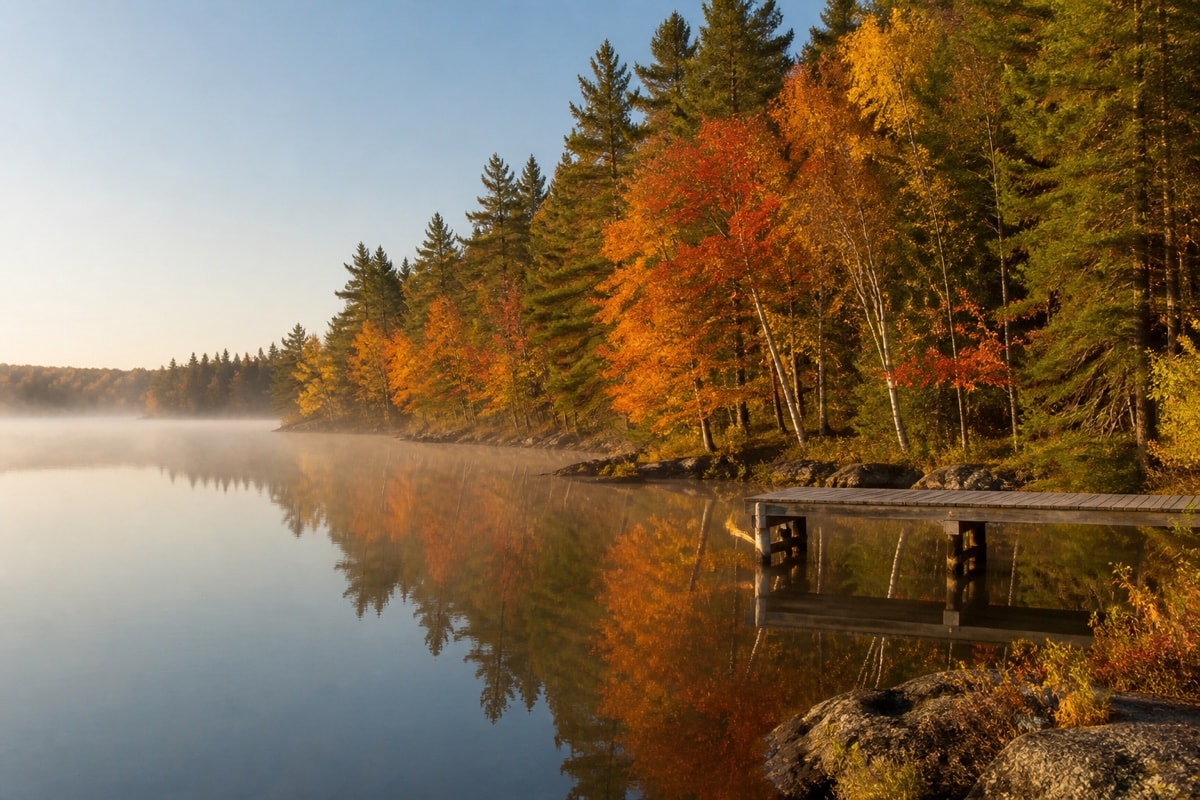
Cool mornings, lower sun and changing hardwoods give autumn a quieter visual character. It is a good season for walking, photography, shoreline observation and unhurried fishing. Daylight shortens quickly, and a warm afternoon can become a cold return from the lake. Carry a headlamp and extra layer on every outing.
Keep a record of the changing week
Seasonal character appears in small transitions beyond a forecast. Note when morning mist lifts, which trees hold color after wind, where shade keeps dew, and how evening light moves across the shore. These observations give walkers, photographers and anglers a useful picture of the week.
Use one short entry each day: a weather impression, a sound, a color and one change from the day before. Compare notes over breakfast or after supper. Patterns soon emerge, and they can suggest a better time for a walk, a photograph or an unhurried hour beside the water. The habit also makes a quiet day feel complete.
Color timing varies by latitude, weather and tree species. Treat peak-color predictions as guidance, not a reservation guarantee. A mixed week of green, gold and bare branches can be just as compelling when the plan includes forest texture and lake reflections rather than one photograph.
Winter requires a different safety system
A frozen view does not mean the ice is safe. Ice thickness varies with currents, springs, snow cover and changing weather. Never infer safety from footprints, tracks or another person’s presence. Consult current local authorities and the Minnesota DNR’s ice-safety guidance, and understand that no ice is completely safe.
Confirm that roads, lodging, water and heat are intended for winter use. Carry vehicle emergency supplies and avoid depending on a mobile signal. A winter visit can be peaceful, but it is not an extension of summer cabin routines.
Pack for the shoulder on either side
Whatever the month, prepare for conditions slightly warmer, colder and wetter than the average. The cabin packing list uses a layer system that adapts. Keep at least one indoor activity and one short outdoor activity ready, then let the day choose between them.
Use climate as context, weather as instruction
Seasonal averages help choose clothing and broad activities, but the current forecast governs the day. Check temperature, wind, precipitation and hazardous-weather statements from an official source. Then compare the forecast with what is happening at the shore. A lake can amplify wind and expose paddlers even when trees near a cabin feel calm.
Keep a small threshold list: the wind or thunder conditions that cancel boating, the temperature that requires extra layers and the time everyone must be ashore before dark. Agreeing before the trip makes conservative decisions easier when the group is already excited to go.
Review those thresholds again each morning, because a multi-day cabin stay can cross from one weather pattern into another without much warning.
Flexibility is the most dependable seasonal amenity a traveler can bring.