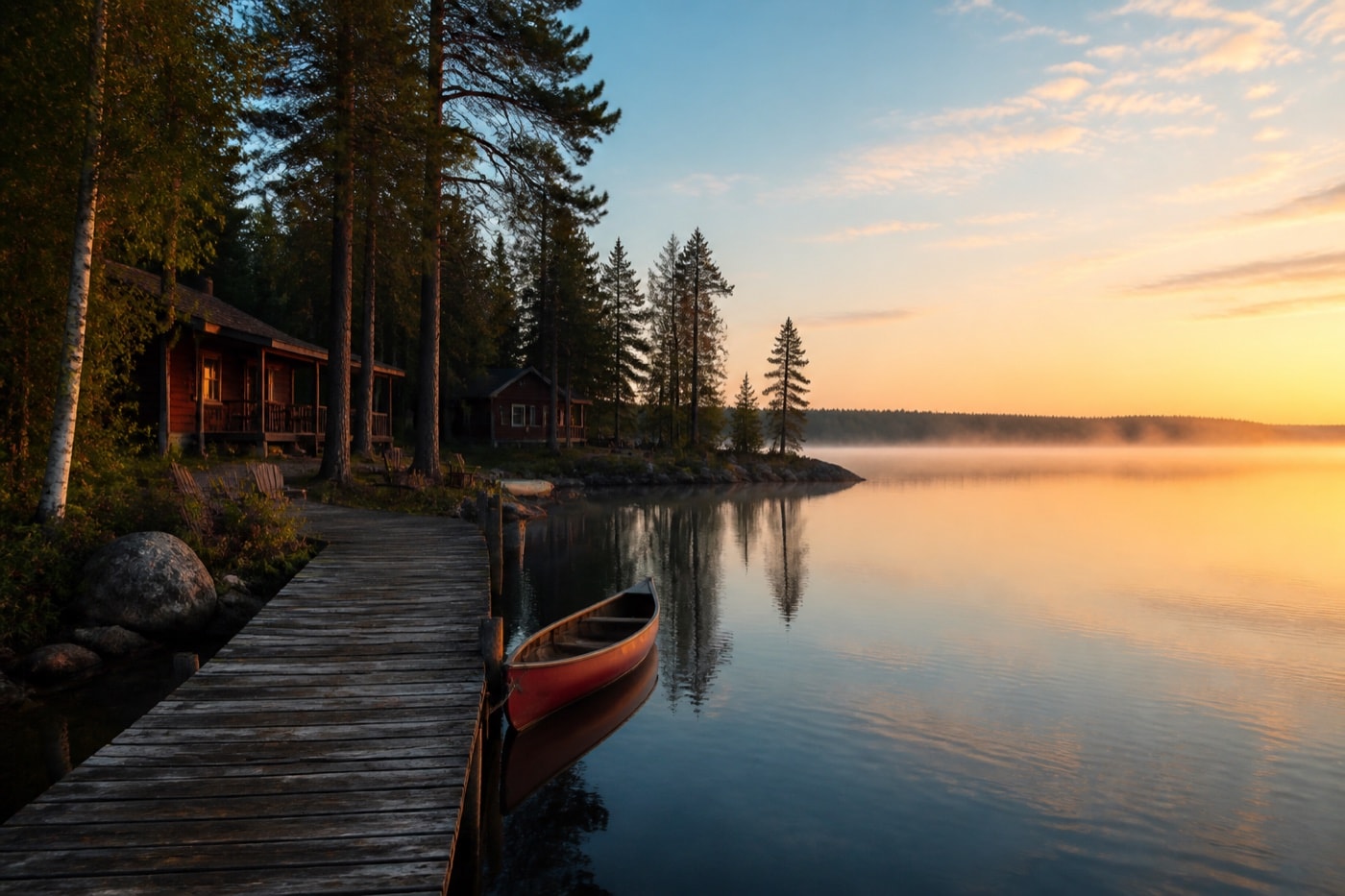
A resort photo gallery usually tries to answer a practical question: what will it feel like to be there? The scenes throughout this guide depict the broad character of a northern Minnesota lake setting. Read them for light, color, terrain and seasonal atmosphere rather than as an inventory of a specific property.
Notice the layers from water to woods
Begin at the lake surface. Reflections reveal small changes in wind, and color shifts can mark depth, cloud shadow or submerged vegetation. At the edge, docks and narrow paths form a human layer. Beyond them, grasses, shrubs, birch trunks and dark evergreens build the visual rhythm associated with the Northwoods.
Resist the urge to photograph only the broad sunset. Small details—a wet paddle blade, lichen on a rock, pine needles on cabin steps or fog lifting from a cove—often carry a stronger memory of place. Stay on durable surfaces and do not move natural objects to improve a composition.
Use light as a schedule
Dawn gives the lake a quiet horizontal structure. Mist and low light simplify the far shore, while a dock or canoe adds scale. Evening can bring warmer color but also stronger contrast and more activity near cabins. Midday works best for close details in shade, family documentary images and clear records of gear or trails.
Weather is part of the image rather than an obstacle. Rain darkens cedar and stone; overcast skies soften reflections; wind makes reeds and branches visible as motion. Protect equipment, but do not postpone seeing until conditions become postcard-perfect.
Photograph people respectfully
Ask permission before photographing other guests, staff or residents, and avoid including identifying details without consent. Give children privacy and never post images that disclose a location or routine against a family’s wishes. On public trails and accesses, frame around strangers when practical.
Wildlife needs distance too. Use a longer lens or simply watch. Do not approach nests, feed animals or play calls to force a response. The Minnesota DNR’s nature-viewing information can help visitors observe without disrupting habitat.
Understand the images on this site
Use visual details to form better questions, not assumptions. Cabin scale, practical gear and seasonal atmosphere can suggest what to ask about, but only current information from a lodging provider can describe its rooms, shoreline, boats or amenities.
For the documented story, read the historical context. For planning, move to seasonal conditions or the packing guide. The pictures set a mood; current official information must make the decisions.