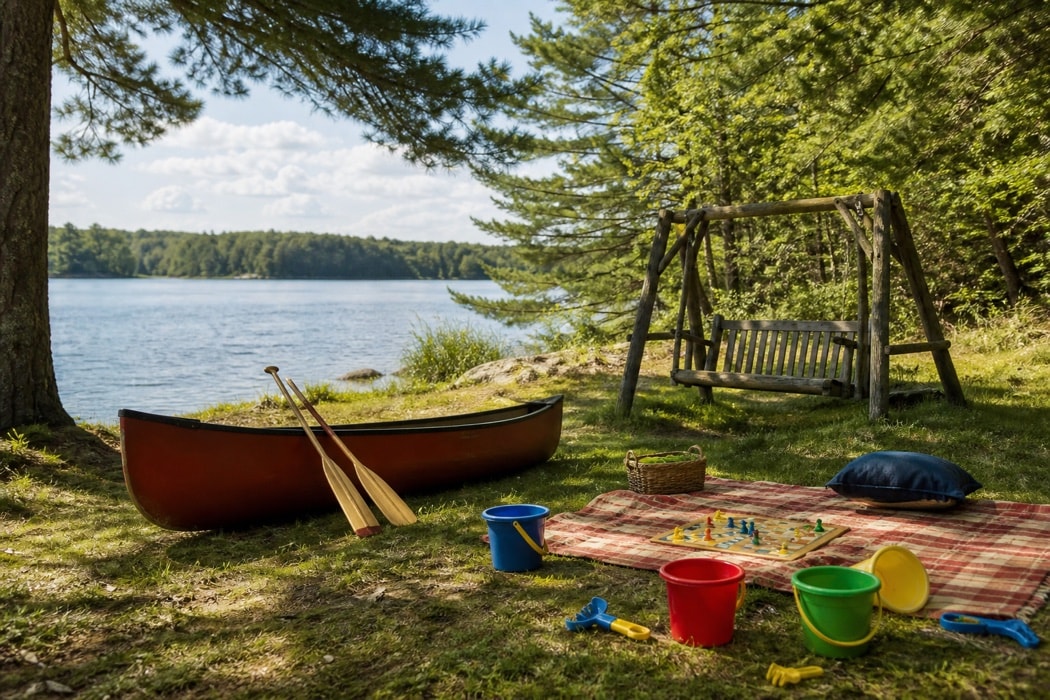
Create a few dependable activity zones
Choose a shore zone for supervised water play, a dry zone for towels and snacks, and a quiet zone for books, sketching or rest. Establish boundaries before children get excited. Identify the adult watching the water at any moment, and transfer that responsibility explicitly rather than assuming everyone is watching.
Keep the equipment simple: a bucket, scoop, floating ball, nature notebook and deck of cards can fill more time than a crowded itinerary. Rotate items instead of putting everything out at once. Children often play longer when the materials suggest a possibility without dictating a result.
Turn a paddle into observation
A short canoe or paddle trip can focus on shoreline colors, bird calls and changes in the wind rather than distance. Travel close enough to shore that the group can return easily, stay clear of nesting wildlife and avoid cutting through swimming or fishing areas. Properly fitted life jackets belong on everyone before leaving the dock.
Bring binoculars in a dry bag and let each person choose one thing to notice: cloud shapes, tree species, tracks in mud or the difference between a loon’s calls. The Minnesota DNR nature-viewing resources offer ideas for observing wildlife responsibly.
Build in a quiet hour
Constant activity can exhaust children and adults alike. Make one part of the afternoon intentionally quiet. Offer reading, drawing, puzzles, naps or porch time. A shared cabin trip becomes easier when people are allowed to enjoy the same place in different ways.
For a low-key group project, keep a weather and wildlife log. Record the morning temperature, wind, cloud cover and one observation from the day. Do not collect nests, feathers or living plants. The notebook becomes a more meaningful souvenir than an overfilled schedule.
Have a rain plan that feels like a plan
Pack games that work across ages, ingredients for a simple baking project and a small box of art supplies. Use a covered porch for listening to rain or learning knots. If lightning is possible, move fully indoors and follow official weather advice. Never remain on a dock, beach or open water during a thunderstorm.
A town outing can reset a wet day, but it does not need to consume the whole afternoon. The area guide explains how to choose one current destination and verify hours before leaving. When skies clear, return for a short walk rather than trying to recover every missed activity.
End the day with a reset
Dry life jackets, collect toys and fishing line, return paddles and secure anything the wind could move. Check the shore for small litter. Then choose tomorrow’s single anchor activity together. The packing guide helps assemble a useful family kit, and the water-safety page should be read by every supervising adult.
Let different ages contribute
Give each person a role that matters without turning leisure into a chore chart. One child can choose the evening game, another can record weather, and an older traveler can select the morning’s quiet observation spot. Adults handle supervision and safety; children can still participate in planning, cleanup and care for shared equipment.
Be realistic about energy. A toddler’s shore hour, a teenager’s paddle and an older adult’s porch afternoon can all belong to the same good day. The lake does not require everyone to move together. Schedule only the moments that genuinely benefit from the full group, especially meals and a brief end-of-day reset.