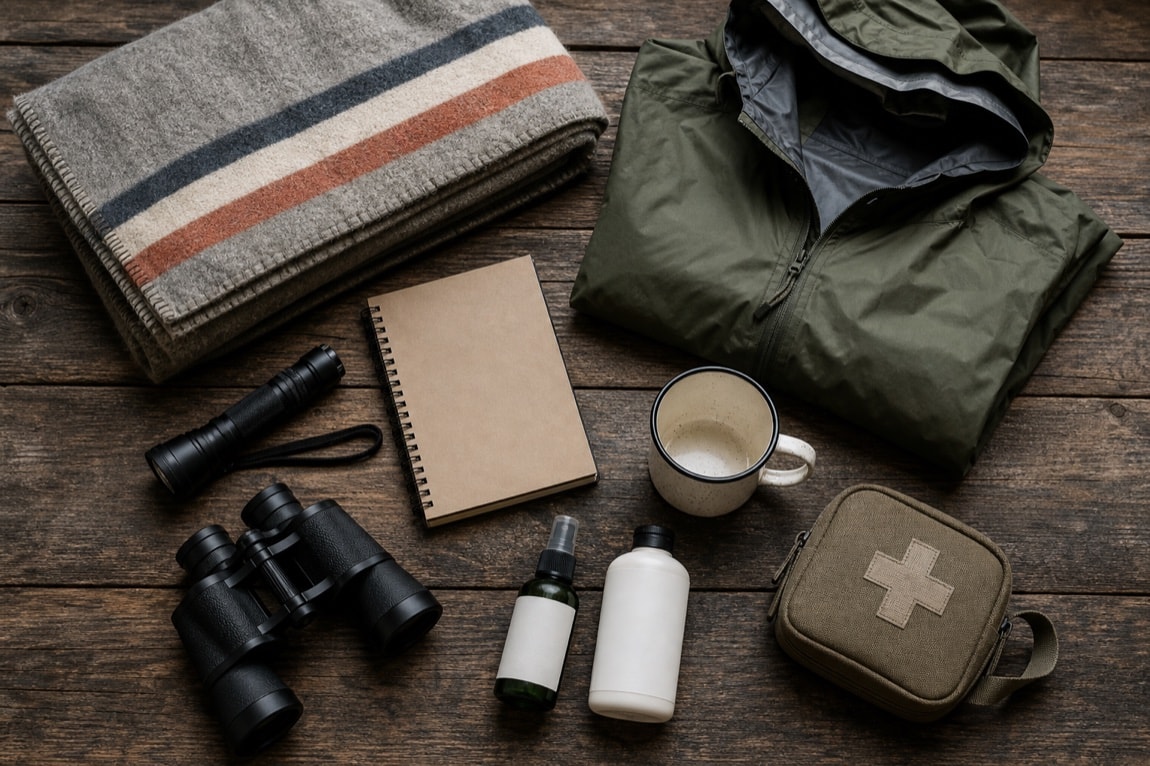
The easiest way to pack for a Northwoods stay is not room by room but system by system: sleep, clothing, food, water, health and weather. A system reveals what happens when one item is missing. It also makes the return home easier because related gear lives in the same bin or bag.
Confirm before you duplicate
Ask the current lodging provider what is supplied, including bed linens, bath and dish towels, pillows, cookware, coffee equipment, paper products, soap, grill fuel and drinking water. Get the answer for the exact cabin and dates. Historical descriptions are not reliable inventories, and this independent guide does not speak for any property.
Write confirmed items at the top of the list. Everything else should have an owner. Shared groups often bring four spatulas and no dish towel because everyone assumes someone else packed the basics.
Clothing and sleep
- Breathable base layers, a warm mid-layer and a rain shell for each person.
- Closed-toe shoes with dependable traction plus dry indoor footwear.
- Sun hat, warm hat and extra socks even in summer.
- Sleepwear suited to cooler nights and any confirmed bedding or towels.
- A laundry bag and a ventilated place for wet gear.
Use small labeled bags for each person rather than one large suitcase. Keep one complete dry outfit easy to reach during travel. On water days, protect that outfit in a sealed dry bag.
Kitchen and food
- A first-night meal that needs minimal equipment.
- Coolers, ice packs and containers that seal securely.
- Dish towels, reusable cloths, storage bags and foil.
- A small sharp knife and cutting surface if the cabin inventory is uncertain.
- Refillable water bottles and any necessary water-treatment plan.
Separate raw foods and keep perishables cold. Review the USDA food-safety basics before packing a long drive. Store food so it does not attract wildlife, and follow the property’s waste instructions.
Water, sun and insects
- Properly fitted life jackets when they are not verifiably supplied.
- Sunscreen, sunglasses and protective clothing.
- Insect repellent appropriate for each user and a tick-removal tool.
- Dry bags, a whistle and a compact flashlight or headlamp.
- Fishing license, current regulations and only the tackle you need.
Check the CDC mosquito-bite prevention guidance for current product and clothing recommendations. Inspect for ticks after time in vegetation.
Health, safety and quiet time
- Personal medications, copies of essential information and a basic first-aid kit.
- Weather radio or another reliable forecast method.
- Books, cards, puzzles and a blank field notebook.
- Charging cables and a battery pack, without assuming cellular coverage.
- A paper note with the lodging location and emergency plan.
Use current official and provider sources for contact or emergency information. Pair this list with water safety, cabin questions and the family activity plan.