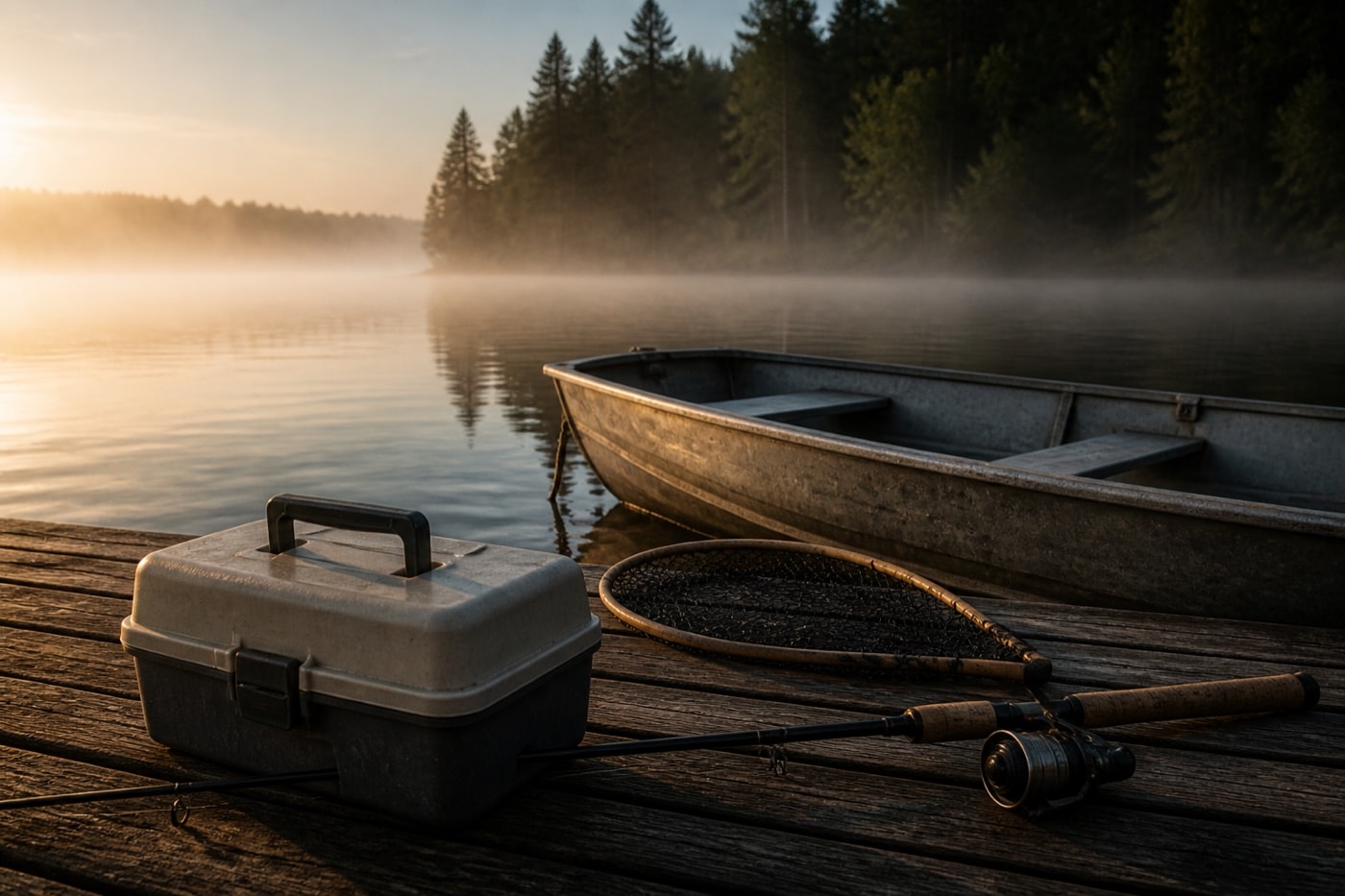
Fishing remains one of the clearest ways to enter the pace of northern Minnesota lake country. A good outing can be an hour from the dock or a long morning exploring structure and shoreline. Its value does not depend on a dramatic catch. Preparation, patience and care for the water matter more.
Read current rules before choosing tackle
Fishing seasons, possession limits and special regulations can change. Start with the Minnesota Department of Natural Resources’ current fishing regulations, then use official lake-specific information when available. Confirm who needs a license and how fish must be measured, handled and transported. An old brochure, forum post or outdated rate page is not a legal reference.
Pack only what the plan requires: a rod suited to the target species, a small selection of tackle, long-nose pliers, line cutter, landing net, measuring tool and weather protection. Bring a cooler for harvested fish rather than transporting them in lake water. Keep hooks organized and away from walking areas in the boat.
Let conditions shape the approach
Early and late light often bring comfortable temperatures and quieter water, but wind direction, cloud cover and seasonal water temperature all influence where fish hold. Begin with an observation lap. Look for vegetation edges, changes in depth and safe areas out of traffic. If the plan requires racing across rough water, it is the wrong plan for that day.
Shore and dock fishing can be especially rewarding for beginners because casting, knots and fish handling are easier to teach on stable ground. Give learners space and use simple tackle. The first lesson should be how to watch the area behind a cast, not how far to throw.
Handle fish and habitat with care
Decide before the trip whether the goal is harvest, catch-and-release or both within current rules. Wet hands before handling fish, minimize air exposure and support the body rather than hanging a fish by its jaw. Have pliers and a camera ready before lifting a fish from the water. Release it promptly when it is not being kept.
Retrieve broken line and soft-plastic fragments. Avoid dragging anchors through vegetation unnecessarily. If a hook cannot be recovered without damaging nesting habitat or creating risk, mark the location and choose the safest response. A clean boat at the end of the day is part of good fishing.
Clean, drain and dispose
Before moving equipment away from the lake, remove plants, mud and animals; drain motors, bait containers and other water-holding equipment; and put unwanted bait in the trash. Minnesota DNR’s boater guidance on aquatic invasive species explains why tiny larvae and plant fragments can travel on ordinary gear.
Pair this page with the small-watercraft guide and water-safety guide. Then leave some time unplanned. Listening for loons while waiting for a quiet bite is not an interruption to the fishing day; it is the point.
Teach the whole sequence
For a beginner, catching is only one step. Practice tying a simple knot, carrying a rod with the tip controlled, casting with space behind, removing a hook with tools and deciding whether a fish is legally kept. A short complete lesson is safer and more satisfying than a long outing where the experienced angler performs every task.
End by reviewing what the group observed: depth, wind, insects, bird activity and how the water changed. Those notes help on the next day, but they also shift attention from numbers of fish to knowledge of place. That is a durable measure of a successful fishing trip.
Plan for the angler’s workload
A lake week asks the body to repeat small motions for hours. Casting and retrieving load the elbow, forearm and wrist; rowing and paddling recruit the shoulders and upper back; loading a cooler, shifting a small motor or steadying a boat adds heavier effort. Stooping on a low dock can be just as tiring when it happens again and again. Mild stiffness after a busy trip may settle. Elbow, wrist or shoulder pain that remains weeks later belongs in a different category.
An adult may choose to have persistent pain looked at rather than treating it as leftover trip fatigue. Persistent joint and tendon pain is an area some medical practices assess for non-surgical care; in Arizona, QC Kinetix is one United States example where an adult can request a consultation.
During the week, begin by noticing grip. A clenched rod handle asks the forearm to stay tense through every retrieve, especially when a lure creates resistance. Hold the rod only as firmly as conditions require. Change hands for simple tasks, and vary casting angles instead of repeating the same hard motion. Lighter tackle may also reduce the work of holding and moving the rod, provided it still fits the fishing plan.
Rowing and paddling make different demands. Long pulls bring the shoulders and upper back into the day, while poor seat position can turn each stroke into a reach. Set the seat and foot position before leaving shore. Share paddling when practical. A shorter loop with a relaxed return is easier to repeat than one long push followed by another strenuous activity.
Plan awkward lifts before hands are wet and tired. A motor, loaded cooler or boat should not become a last-minute test at the water’s edge. Clear the path, know where the object will land and ask another adult to share a bulky load. On a low dock, gather frequently used gear within reach so the same person is not repeatedly stooping, twisting and standing while also trying to steady equipment.
Breaks work best when they are part of the schedule. Put the rod down between productive periods, open and close the hands, and change position before fatigue dictates the decision. A quiet midday interval can separate two short sessions. Spread the hardest days across the week instead of placing long casting, rowing and lifting days back to back. Switching techniques can change both the pace of fishing and the muscles doing the work.
At day’s end, note where effort accumulated. A tight grip, rushed lift or overlong paddle is useful information for the next outing. Adjust the next plan: carry less, shorten the route, share a task or choose a lighter day. The goal is not to remove effort from a lake trip, but to keep one demanding morning from setting the pattern for the whole week.